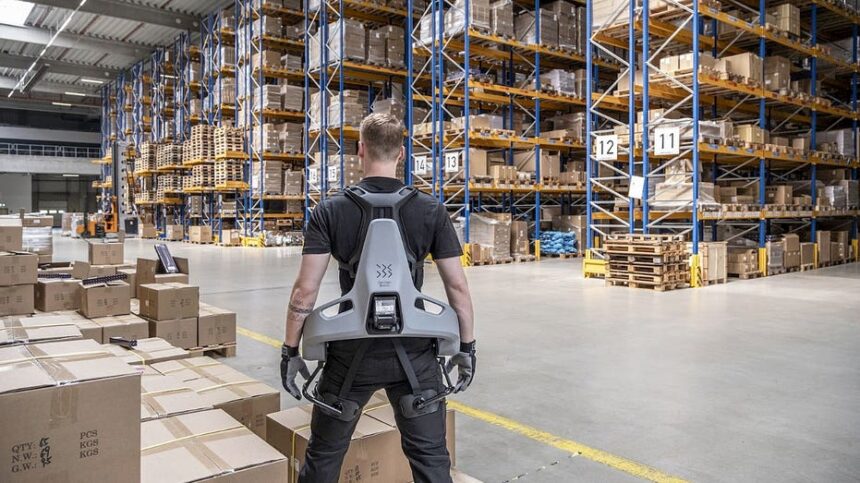
If you have ever spent a full day lifting, drilling overhead, or bending over a conveyor belt, you know how quickly fatigue sets in. That is exactly where come in.Â
These strap onto the body and help carry the load. Instead of your muscles doing all the work, the device shares it. As a result, workers feel less strain and can stay productive longer. This tech is already showing up on real job sites across the country.
Sign up for my FREE CyberGuy Report
Get my best tech tips, urgent security alerts, and exclusive deals delivered straight to your inbox. For simple, real-world ways to spot scams early and stay protected, visit CyberGuy.com – trusted by millions who watch CyberGuy on TV daily. Plus, youll get instant access to my Ultimate Scam Survival Guide free when you join.
Industrial exoskeletons are wearable mechanical systems designed to support your body during physical tasks. They do not replace workers. They help workers perform demanding jobs with less physical stress. There are three main types, and each works differently depending on the job.
Passive systems do not use motors or batteries. Instead, they rely on springs or mechanical structures to redistribute weight.
A strong real-world example is the Hilti EXO-O1. This shoulder harness shifts the weight of your arms to your hips using spring-loaded supports. Testing shows it can reduce shoulder muscle load by up to 47% during overhead work. Many workers say tools feel almost weightless by the end of the day.
Another example is the Laevo FLEX. This passive system uses spring-based assistance to support the lower back during bending and lifting. It is designed for dynamic movement, allowing workers to walk freely and lift without needing to switch the system on or off.
Laevo FLEX also offers adjustable support and is built for long wear across different environments, including outdoor use. Like other passive systems, it helps reduce strain on the lower back during repetitive tasks without adding motors or batteries.
These systems are relatively lightweight, typically between about 4.4 and 8.8 pounds. However, support remains constant during use, so it cannot adapt automatically to different tasks in real time.
Powered exoskeletons use motors, sensors, and onboard processors to actively assist movement. An example is the German Bionic Exia. This battery-powered back exoskeleton is designed for warehouse and logistics work, where employees lift and move items throughout the day. It actively supports the lower back during lifts, helping reduce strain and fatigue over time.
These systems track your motion using sensors and respond almost instantly. Many can detect lifting movements in real time and provide support as you move, so the assistance feels natural instead of delayed.
Powered exoskeletons can significantly reduce the effort required for repetitive lifting tasks, especially in high-volume environments.
However, there are trade-offs. Some powered systems are heavier and can weigh over 40 pounds, depending on the design. They are also far more expensive, often costing tens of thousands of dollars, so most companies introduce them through pilot programs.
Soft exosuits use fabric, straps and tension systems instead of rigid frames. One example is the HeroWear Apex 2. This lightweight system weighs about three pounds and wraps around the shoulders and waist to assist with lifting movements.
In warehouse testing, soft back-support exosuits have been shown to improve productivity while reducing reported lower back discomfort for workers performing repetitive tasks.
These systems allow more natural movement than rigid exoskeletons. However, they provide less force, so they are best suited for repetitive tasks rather than heavy lifting.
The biggest benefits show up in everyday tasks that put th